Which Bamboo Toothbrush Is Best? What to Check Before You Buy
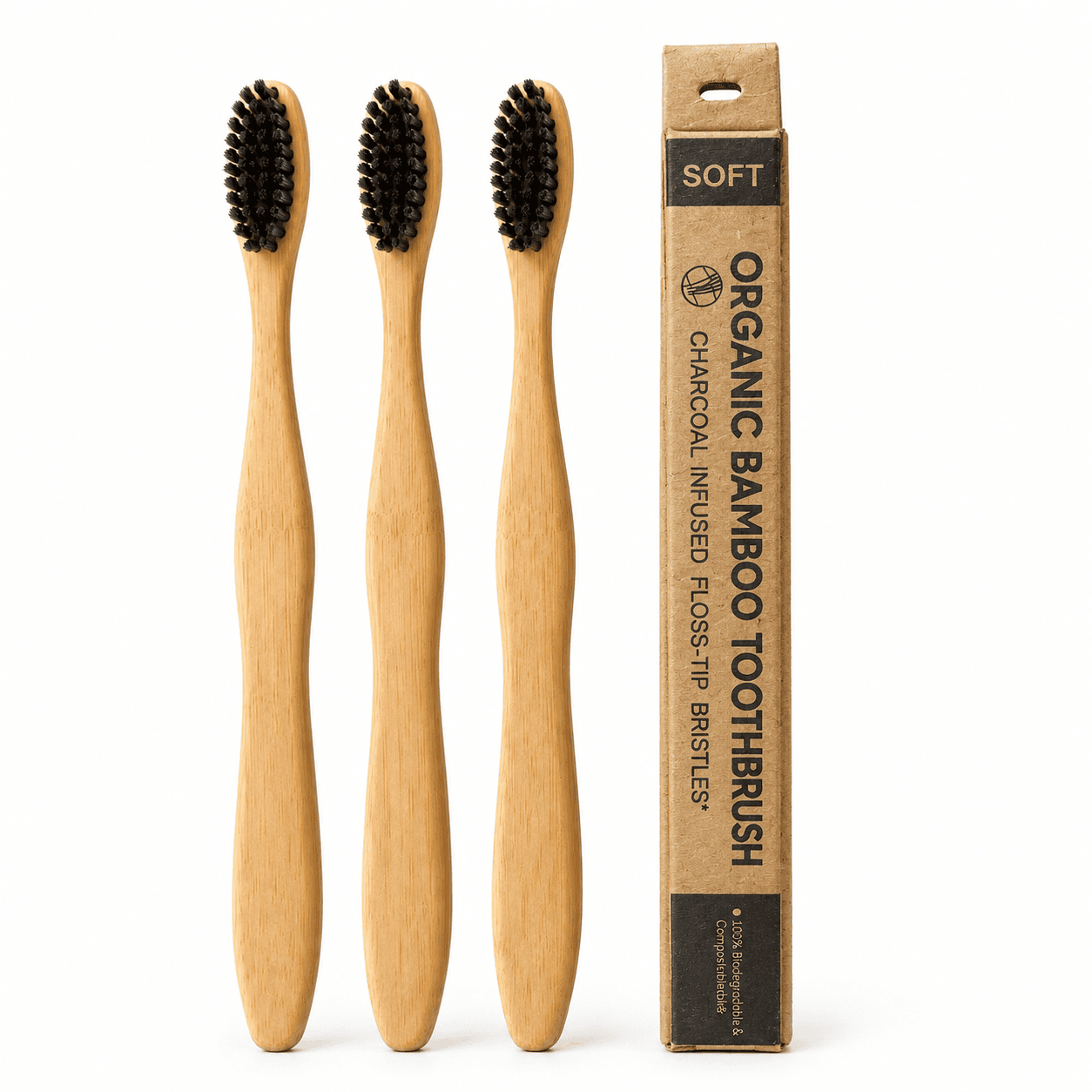
The best bamboo toothbrush has soft bristles, a smooth splinter-free handle that is designed to resist moisture, and honest labelling about what is and isn't biodegradable. The handle is bamboo and compostable, but almost every bamboo toothbrush, including NAVAKYA's charcoal-infused one, has nylon bristles. Below is how to compare brushes, what the bristles are made of, and how to store the brush so it lasts.
What Are Bamboo Toothbrush Bristles Made Of?
Most bamboo toothbrush bristles are made of nylon, usually BPA-free. Bamboo is the handle, not the bristle. NAVAKYA's brush uses soft, BPA-free nylon bristles infused with activated charcoal. The charcoal gives the bristles their dark colour. We make no medical or antibacterial claims for it.
This means a bamboo toothbrush is not 100% plastic-free:
- Handle: 100% natural bamboo, biodegradable and compostable.
- Bristles: Nylon, which is not biodegradable. Dispose of it as dry waste.
Be cautious of any brand that calls the whole brush "100% compostable" without explaining what the bristles are made of.
Is a Bamboo Toothbrush Better Than Plastic?
For the handle, yes. For brushing performance, they are about the same. A bamboo handle replaces a plastic one that would sit in landfill for centuries, and bamboo breaks down in soil within months. Bristles do the actual cleaning, and these are nylon in both types. Choose a bamboo toothbrush for the lower plastic footprint, not for a cleaning advantage.
What to Look for in the Best Bamboo Toothbrush
- Soft bristles: Look for soft or medium-soft bristles that are gentle on enamel and gums.
- Splinter-free handle: The bamboo should be finely buffed and smooth, with no rough patches.
- Moisture handling: Bamboo and water don't mix well. Look for a brush that is heat-treated and sealed rather than raw bamboo.
- No synthetic varnish: Check that the handle is not coated in plastic-based paint or lacquer.
- Honest disposal instructions: The brand should tell you what to do with the bristles, not just the handle.
NAVAKYA's charcoal bamboo toothbrush is built around these points. The handle is heat-treated (carbonized) and buffed smooth. It has no synthetic plastic varnish and a natural plant-based wax seal at the base. It comes in zero plastic packaging. If you want a single pick, the best bamboo toothbrush in our range is this one.
How to Store a Bamboo Toothbrush
Storage matters more for bamboo than for plastic:
- Rinse and dry: After brushing, rinse under the tap and lightly pat or wipe the brush with a dry towel.
- Stand it upright: Keep it in an open, ventilated stand where air can reach it.
- Avoid standing water: Never leave it in a closed glass or tumbler with water pooled at the bottom. Constant moisture is what makes bamboo go dark and grow mould.
The plant-based wax seal on the base helps protect against water in the holder, but it does not replace good storage habits.
How to Dispose of a Bamboo Toothbrush
Replace your brush every 3 months, like any toothbrush. When it is time:
- Pull out the bristles with pliers. This takes a little effort.
- Put the bristles in dry waste or landfill waste bin since nylon is non-biodegradable.
- Compost the handle: Place the bare bamboo handle in your home compost, soil, or organic green waste bin, where it naturally breaks down into earth.